If you signed a solar contract in Nevada and the savings never materialized or you were pressured into signing, surprised by an escalator clause, or sold a system that was never properly explained you have one of the strongest sets of state-level protections in the country. Nevada has dedicated statutes specifically governing residential rooftop solar agreements, and the Nevada Attorney General’s Bureau of Consumer Protection actively enforces them.
Nevada law gives homeowners a three-business-day right to rescind a solar agreement, requires specific disclosures on the cover page of every solar contract, and — critically — makes a contract voidable when a solar installation company knowingly violates the statute. A qualified attorney may review whether your situation may give rise to one of those remedies. Solar Cancellation Resource Center collects and organizes information from Nevada homeowners and connects them with Consumer Advocacy Law Group, a law firm experienced in consumer protection matters. Submit your information for a free intake — there is no obligation, and the intake itself does not create an attorney-client relationship.
Take this quiz to see if you're eligible for cancellation.
Nevada is one of the few states that has written rules specifically for residential rooftop solar — what the statute calls a “distributed generation system.” These rules sit inside Nevada’s Deceptive Trade Practices Act and apply on top of the general consumer protections every Nevadan has.
1. NRS 598.9801 to 598.9822 — Distributed Generation System Provisions This block of statutes was meaningfully strengthened by SB 293 in 2023. It governs what a residential solar contract must disclose, how cancellation works, and what happens when a solar installation company doesn’t follow the rules. Three provisions matter most to homeowners considering whether their contract may be subject to legal challenge: • NRS 598.98216 — Three-Business-Day Right of Rescission: Any purchaser, lessee, or host customer who enters into or signs an agreement for a distributed generation system or a power purchase agreement may rescind or cancel the agreement, without any penalty or obligation, by giving written notice to the solar installation company by midnight of the third business day after signing. Notice may be delivered, mailed, or sent by electronic mail. • NRS 598.9822 — Voidable Contracts: Where a solar installation company knowingly violates any section of NRS Chapter 598 governing the transaction for the sale and purchase of a solar system, the agreement may be voidable by the purchaser. Noncompliance also constitutes a deceptive trade practice and a violation may constitute consumer fraud. • Required cover-page disclosures: Solar contracts in Nevada must include specific disclosures on the cover page (NRS 598.9809, 598.9813, and 598.9816, depending on whether the agreement is a sale, lease, or PPA). Contracts must also be available in English and other languages where applicable. Where required disclosures were not made, an attorney may review whether the omission may be a potential issue.
2. Nevada Deceptive Trade Practices Act (NRS Chapter 598, generally) Beyond the solar-specific provisions, Nevada’s broader Deceptive Trade Practices Act prohibits misrepresentation, false advertising, and deceptive sales practices in any consumer transaction. The Nevada Attorney General’s Bureau of Consumer Protection has used this statute to investigate solar companies, lead generators, and finance companies. A qualified attorney may review whether the conduct in your transaction may be subject to this statute.
3. Nevada State Contractors Board Licensing Solar installation companies must be licensed by the Nevada State Contractors Board to sell and install residential solar in Nevada. Lead generators and salespeople operating on behalf of an installer are also subject to oversight. Installation by an unlicensed contractor — or sales conducted by parties not properly registered — may give rise to a complaint to the Board and may, separately, be a fact a qualified attorney would consider when reviewing contract enforceability.
Many Nevada homeowners signed solar contracts after being told their NV Energy bill would go to zero — or that the solar payment would simply replace the utility bill. Both claims are commonly inaccurate. Nevada’s Bureau of Consumer Protection specifically warns homeowners that representations of “no utility bill” or “free solar” are not accurate.
• You will continue to receive a bill from NV Energy. Even with rooftop solar, NV Energy
charges a basic service fee, and any electricity you draw from the grid (especially in
summer evenings, when solar production has stopped but cooling loads are at their
peak) is billed at the retail rate.
• Net metering credit rates in Nevada have changed materially. The credit you receive for
excess generation sent back to the grid is set by the Public Utilities Commission of
Nevada (PUCN) and has been adjusted multiple times. A salesperson who used
outdated net metering math — or who promised one-to-one credit when the rate was
tiered — may have materially misled you.
If your sales pitch included a savings projection that ignored these realities, a qualified attorney
may review whether that projection may support a claim under NRS Chapter 598.
Two NV Energy realities every homeowner should understand when reviewing what they were told versus what they signed:
Every situation is fact-specific, but the patterns reported repeatedly to the Nevada AG and to
homeowner advocacy groups include:
Promises of a zero NV Energy bill, claims of affiliation with the utility, government, or PUCN, or representations that the system would be “free.” Nevada’s Bureau of Consumer Protection has flagged these specific claims as inaccurate. Where they appear in the sales pitch but not in the written contract, an attorney may review whether NRS Chapter 598 may apply.
NRS 598.9809, 598.9813, and 598.9816 require specific cover-page disclosures depending on whether the contract is a sale, lease, or PPA. Where required disclosures are missing, NRS 598.9822 makes the agreement potentially voidable by the purchaser when the violation was knowing.
Some homeowners report attempting to cancel within Nevada three-business-day rescission window and being told they couldnt, or being unable to reach the solar company. A qualified attorney may review whether obstruction of the statutory rescission right may itself be grounds.
High-pressure sales — particularly tablet-based signings completed in 20 minutes or less — frequently leave homeowners with contracts they never had a chance to read. Nevada’s Deceptive Trade Practices Act applies to these tactics. The three-day rescission window also applies to door-to-door sales.
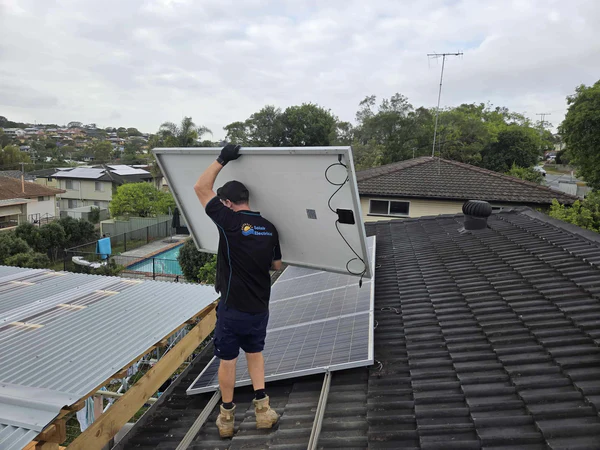
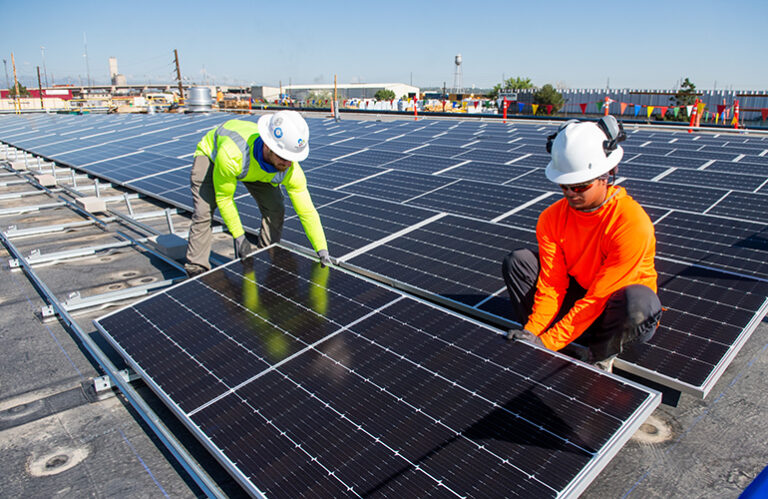
Nevadas extreme summer heat is hard on solar inverters and electronics. Undersized systems that cannot offset summer cooling loads, panels that lose output to dust accumulation, monsoon damage, and ghosted service after installation are recurring complaints. An attorney may review whether documented non-performance may support a remedy.
Nevada homeowners affected by recent solar company closures (including SunPower and other national installers) face questions about who now owns the contract, who honors the warranty, and whether the agreement may still be subject to legal challenge. A qualified attorney may review what may apply to your specific situation.
SCRC is a marketing and intake service. We are not a law firm, and we do not analyze, audit, or
evaluate your contract. Our role is straightforward:


Important: do not stop making payments on your solar contract or financing without first
speaking with a qualified attorney. Stopping payments without legal guidance may result in late
fees, damage to your credit, default, repossession, foreclosure proceedings, or other
consequences.
Many Nevada homeowners discover, often only when trying to sell their home, that a UCC-1 financing statement has been filed in connection with their solar agreement. A UCC-1 is a financing statement filed against the solar equipment, not the home itself. It may, however, appear in a title search in Clark, Washoe, or any Nevada county and complicate or delay a home sale. If you are trying to sell a home with solar and have run into a UCC-1 issue, a qualified attorney may review the filing and advise whether the underlying contract may be subject to challenge or whether the filing may be addressed through a UCC-3 amendment or other process.
Below are representative experiences shared by Nevada homeowners who have submitted information to SCRC. All testimonials reflect individual experiences. Past results do not predict future outcomes.
Las Vegas, NV
The salesperson knocked on my door in July, told me NV Energy was about to raise rates again, and that Id have no power bill if I signed that day. He had me on a tablet in 15 minutes. I never saw an escalator clause until two years later when my payment had gone up. I called SCRC and they walked me through what information to gather. Free intake, no pressure.
Henderson, NV
“My system was undersized for the summer. My NV Energy bill in August was almost as high as before solar, and I was paying the solar company on top of it. The installer stopped returning calls. SCRC connected me with their law firm partner after I submitted my documents. The fixed fee was explained up front.”
Reno, NV
‘I was trying to sell my home and a UCC-1 on my solar equipment showed up in the title search. The buyer wanted out. SCRC was clear about what they do and do they an intake service, not a law firm and they organized my documents to send to a qualified attorney for review.”
Whether a specific Nevada solar contract may be cancelled depends on the facts of your case and the terms of your agreement. Nevada law — including the three-day rescission right at NRS 598.98216 and the voidability provisions at NRS 598.9822 — provides several grounds that a qualified attorney may review. Submit your information for a free intake to find out if you may be eligible for a legal review.
Under NRS 598.98216, you may rescind a distributed generation system agreement, lease, or power purchase agreement by giving written notice (delivered, mailed, or emailed) to the solar installation company by midnight of the third business day after signing. If you are inside that window, contact a qualified attorney immediately. Beyond the rescission window, the voidability provisions at NRS 598.9822 may still apply if the company knowingly violated the statute.
Under NRS 598.9822, a solar contract may be voidable by the purchaser when the solar installation company knowingly violates any provision of NRS Chapter 598 governing the sale or purchase of a solar system. This is a fact-specific question for a qualified attorney.
A UCC-1 is a financing statement filed against the solar equipment, not the home itself. It may, however, appear in a title search and complicate a home sale. A qualified attorney may review the filing and advise on options.
Yes. NRS 598.9809, 598.9813, and 598.9816 require specific cover-page disclosures depending on whether the agreement is a sale, lease, or PPA. Where required disclosures are missing, the contract may be voidable under NRS 598.9822. A qualified attorney may review your contract against the statutory disclosure requirements.
In most cases, the financial obligation does not automatically disappear when a solar company closes. The contract or financing may have been transferred to another party. A qualified attorney may review your documentation and advise on what may apply to your situation. SCRC has a separate page on solar company bankruptcies if that fits your situation.
No — not without first speaking with a qualified attorney. Stopping payments may result in late
fees, damage to your credit, default, repossession, foreclosure proceedings, or other
consequences. Continue payments while your situation is evaluated.
Under NRS 598.9804, a distributed generation system generally refers to residential rooftop
solar the kind of system most Nevada homeowners install on their homes. The term covers
most of the contracts that fall within the rescission and disclosure rules of NRS 598.9801 to
598.9822.
SCRC is a marketing and intake service. We collect and organize your information and connect
you with Consumer Advocacy Law Group, our law firm partner. We are not a law firm, do not
provide legal advice, and do not represent you. The intake is free, and submitting information
does not create an attorney-client relationship.
The intake itself is free. If a legal review path is offered through our law firm partner, the engagement is on a fixed-fee basis — fully explained before you commit to anything. SCRC does not charge for the intake.
Submit your information for a free intake. SCRC will collect your documentation and forward it to Consumer Advocacy Law Group, the qualified law firm we work with.