
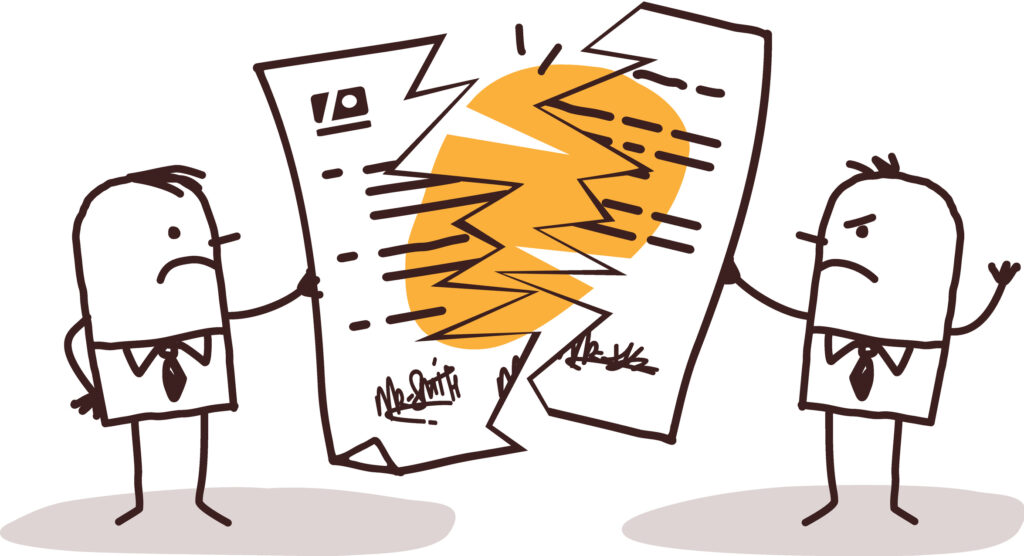
The following case studies are representative composites. They are based on real legal violations, real lender behaviors, and real outcomes secured for homeowners. They illustrate the “Kill Switches” found in the fine print that allows a contract to move from “Active” to “Discharged.”
Legal Disclaimer:The following scenarios are illustrative and based on aggregated case data. While they represent actual legal strategies used by Consumer Advocacy Law Group, individual results vary based on the specific language of your contract and state laws. These are not guarantees of future outcomes.

Example Scenario 1: The “Orphaned” System & The Unauthorized Signature
The Profile: The “Abandoned” Homeowner
The Violation: Forgery and Lack of Consideration
The Scenario: A homeowner in a high-growth solar market (like Florida or Texas) signs up with a mid-sized installer. Six months after the panels are bolted to the roof, the installer goes bankrupt. The system was never fully turned on, the roof is leaking, and the homeowner has no one to call, but the bank is still demanding $250 a month.
The Audit Discovery: During the forensic audit of the digital signing packet, it’s often found that the “Permission to Operate” (PTO) was never granted by the utility. Even more critically, it was also discovered that the “Certificate of Completion” (the document that tells the bank to start billing the customer) was e-signed from an IP address belonging to the salesperson, not the homeowner.
The Resolution Path: Under the FTC Holder Rule, the bank (lender) is legally responsible for the fraud of the seller (the installer). Evidence of the unauthorized signature and the lack of a functioning system would be was presented to the lender’s legal department.
The Result should be: Because the contract was “voidable” due to the unauthorized signature, the lender should agree agreed to a Total Debt Discharge. The homeowner should be was released from the $40,000+ balance, and the lender should issue issued a release of the equipment interest, effectively “gifting” the (non-working) panels to the homeowner to do with as they pleased.

Example Scenario 2: The “Zero Percent” Interest Trap
The Profile: The “Bait and Switch” Victim
The Violation: Truth in Lending Act (TILA) Non-Disclosure
The Scenario: A retired couple was sold a “0.99% Interest” solar loan. They were told the total price of the system was $50,000. They were happy with the low interest rate until they realized that a local contractor could have installed the same equipment for $32,000. They couldn’t figure out why their “cheap” loan was so expensive.
The Audit Discovery should reveal: Once the audit was conducted it should reveal that the $50,000 “Purchase Price” actually included a $14,000 “Dealer Fee” paid directly to the bank to “buy down” the interest rate. Under the Truth in Lending Act (TILA), any fee charged as a condition of credit must be disclosed as a “Finance Charge.” By hiding the $14,000 in the “Purchase Price” of the equipment, the lender provided a deceptive Annual Percentage Rate (APR).
The Resolution Path: TILA violations are a “Red Alert” for lenders because they carry statutory penalties and can lead to the “Rescission” of the loan. Our partner attorneys issued a formal Notice of Rescission based on the disclosure failure.
The Probable Result: To avoid a federal lawsuit and potential class-action scrutiny, the lender should opt opted for a Significant Principal Reduction. A reasonable settlement may look like this: They slashed the $14,000 fee off the balance and recalculaterecalculated the loan based on the actual cash value of the equipment, saving the homeowners over $150 per month.

Example Scenario 3: The “Solar PPA” Performance Failure
The Profile: The “Power Purchase” Prisoner
The Violation: Material Breach of Performance Guarantee
The Scenario: A homeowner signed a Power Purchase Agreement (PPA) where they don’t own the panels but “buy the power.” The salesperson promised the panels would cover 100% of their energy needs. Two years later, the homeowner is still paying a $150 utility bill plus a $180 solar bill. The panels were installed in a shaded area and are producing 50% less energy than promised.
The Audit Discovery: Most PPAs contain a Production Guarantee. Technical audit can compare the actual meter readings against the “Guaranteed kWh” listed in the contract. It can then find out if that the company had failed to meet their production minimum for 18 consecutive months and if it had failed to “true up” or refund the homeowner as required by the contract.
The Resolution Path: This can be a Material Breach of Contract. If the company doesn’t provide the power they guaranteed, the homeowner isn’t obligated to keep the agreement. A licensed attorney can issue a demand for Mutual Termination.
The Result Should be: The solar provider agrees to remove the panels at their own expense. The 25-year PPA its was canceled, and the homeowner’s “Monthly Energy Debt” gets was eliminated entirely. Because the company breached the contract first, there should not be were no early termination fees applied.
What These Scenarios Teach Us
These “Case Studies” prove one thing: The contract is only “ironclad” if you don’t know where the weaknesses are. Solar lenders and providers count on homeowners feeling too intimidated by the legal jargon to fight back.
At SCRC along with the attorneys at Consumer Advocacy Law Group, our focus is on technical accuracy. Your contract is reviewed for documented discrepancies and procedural gaps that may provide a basis for our partner attorneys to seek relief. Whether it’s an unauthorized digital signature, a hidden finance charge, or a breach of a performance guarantee, these errors are the “keys” that unlock the door to your financial freedom.
Is Your Situation Similar?
If you recognize your own story in any of the scenarios above, you may be sitting on a “voidable” contract. You don’t have to guess. Take the First Step Toward Cancellation.
Ready to turn your concerns into a clear path forward? Let our contract specialists perform a free, no-obligation review of your solar agreement today.
- See if You Qualify for Cancellation: Take Our 60-Second Quiz
- Read Homeowner Reviews: Follow Us on Facebook
- Connect with Attorneys at Consumer Advocacy Law Group: Find Us on Google My Business
SCRC is not a law firm and does not give legal advice. SCRC does not advise any consumer contracted with the solar system to stop making payments without consulting an attorney first. Nothing in this communication establishes any type of attorney client relationship, SCRC is a marketing organization that connects consumers with qualified legal professionals.