

In the solar industry of 2026, the gap between what is promised in the living room and what is delivered on the roof has never been wider. As more homeowners transition to renewable energy, the number of formal complaints filed with the Better Business Bureau (BBB), the Federal Trade Commission (FTC), and State Attorneys General has skyrocketed.
At the Solar Cancellation Resource Center, we process thousands of contract audits every year. We see the same patterns of deception and failure repeated across the country. Understanding these complaints is the first step in realizing that you aren’t alone, and that these specific grievances often serve as the legal “keys” to unlocking a predatory contract.
Here are the seven most common solar contract complaints homeowners file today, and the reality of what happens after the complaint is lodged.
1. Misrepresentation of Financial Savings (“The $0 Bill Lie”)
The most frequent complaint we see involves the “Solar vs. Utility” math. Salespeople often show homeowners glossy iPads with colorful charts promising that their utility bill will vanish, replaced by a much lower solar payment.
- The Reality: Homeowners soon realize they are paying a $200 solar loan plus a $150 utility bill because the system was undersized or the utility company’s “connection fees” were never mentioned.
- What Happens Next: When a complaint is filed for misrepresentation, we look for the original “Sales Proposal.” If the written savings projections are mathematically impossible or based on fake utility rates, it creates a “Fraud in the Inducement” claim. This is often enough to force a lender to review the validity of the loan.
2. The “Hidden” 2.9% or 3.9% Annual Escalators
Many homeowners sign a lease or Power Purchase Agreement (PPA) believing their payment is “locked in.” It isn’t until year two or three that they notice their monthly payment has increased.
- The Reality: Deep in the fine print of many 25-year leases is a “price escalator.” A 3.9% annual increase means your $150 payment will nearly double over the life of the contract, eventually costing more than the utility company ever would have.
- What Happens Next: If the escalator wasn’t clearly disclosed, or if the salesperson explicitly stated the rate was “fixed,” this is a violation of consumer disclosure laws. We use these “hidden” costs to argue that the contract is unconscionable and should be terminated.
3. Tax Credit Misinformation and “Rebate” Confusion
Salespeople often tell homeowners they will receive a “30% check from the government” to help pay down their loan.
- The Reality: The Federal Investment Tax Credit (ITC) is a tax credit, not a refund check. If you are retired or don’t have enough tax liability, you get $0. Furthermore, many solar loans are structured so that if you don’t “hand over” that 30% credit within 18 months, your monthly payment jumps by 30% to 50% automatically.
- What Happens Next: Filing a complaint about tax advice given by a non-accountant (the salesperson) is a powerful move. Unlicensed individuals giving specific financial and tax advice is a major regulatory red flag that we use to challenge the contract’s legitimacy.
4. Abandonment and “Orphaned” Systems
With the wave of solar company bankruptcies in 2024 and 2025, thousands of homeowners are stuck with panels on their roof and a company that no longer exists to service them.
- The Reality: The system breaks, the inverter fails, or the roof starts leaking, and there is no one to call. Yet, the bank still expects its monthly payment.
- What Happens Next: This is a “Failure of Consideration” or a “Material Breach.” Under the FTC Holder Rule, you can stop paying the bank if the service you were promised (monitoring and maintenance) is no longer being provided. We specialize in holding banks accountable for the “ghost” companies they partnered with.
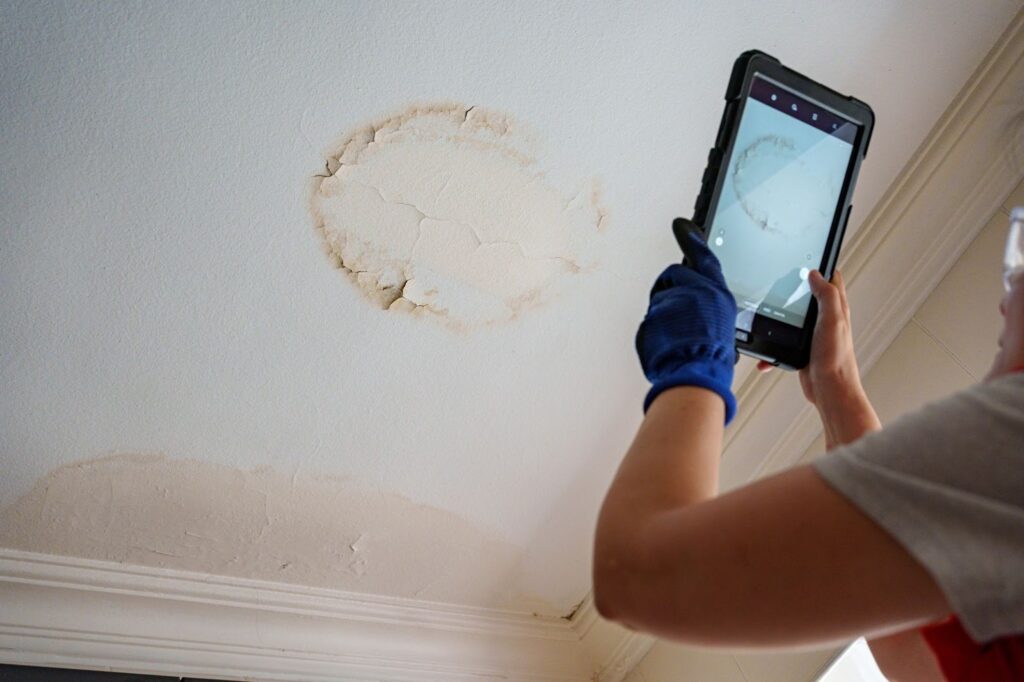
5. Roof Leaks and Property Damage
Solar panels require hundreds of penetrations into your roof’s structure. If installed poorly, leaks are inevitable.
- The Reality: Homeowners file complaints when they see water spots on their ceiling, only for the solar company to claim the roof was “already old” or that the leak isn’t near the panels.
- What Happens Next: A complaint involving property damage often requires an independent roofing inspection. If we can prove the solar installation compromised the structural integrity of the home, it provides massive leverage for a “Rescission and Removal” demand, where the company must take the panels off and repair the roof at their expense.
6. UCC-1 Liens Blocking Home Sales
Many homeowners are shocked to find they can’t sell their house because the solar company has filed a UCC-1 “fixture filing” on their property.
- The Reality: Buyers often refuse to take over a $200/month solar lease, and the solar company demands that the homeowner “pay off” the remaining 22 years of the contract (often $30,000+) just to clear the title.
- What Happens Next: This is a “Slander of Title” issue if the contract was predatory to begin with. We work with title companies to challenge these filings. If the solar company is in breach, they have no legal right to block your home sale, and we can force the removal of the filing.
7. Forged Signatures and Unauthorized “E-Signs”
In the rush to close deals, some predatory salespeople “click” through the digital contracts on their iPads for the homeowner, or forge signatures on “Site Audit” approvals.
- The Reality: Homeowners find out months later that they “signed” documents they never even saw.
- What Happens Next: This is criminal fraud. When we find evidence of unauthorized e-signatures, such as IP addresses that match the salesperson’s device rather than the homeowner’s, the contract becomes “void ab initio” (void from the beginning). This is the fastest route to a full cancellation.
What Happens After You File a Complaint?
Filing a complaint is just the first step in a legal process. Here is what you can typically expect:
The “Corporate Runaround”
The solar company or lender will usually respond to your BBB or AG complaint with a “template” response. They will claim you signed a “Completion Certificate” and that “all savings are estimates.” They hope you will give up after this first hurdle.
The Forensic Audit
This is where the Solar Cancellation Resource Center steps in. We don’t just take the company’s word for it. We perform a forensic audit of the entire deal, looking for:
- TILA Violations: Failure to disclose the true cost of credit.
- Production Gaps: Comparing promised energy to actual output.
- Licensing Issues: Checking if the person who sold or installed the system was actually licensed in your state.
Negotiation and Settlement
Once we present the lender with a “Demand for Rescission” backed by evidence of these 7 common complaints, the “math” changes for them. It becomes cheaper for them to cancel your contract or significantly reduce your debt than to fight a losing battle in arbitration or court.
Building E-E-A-T: Why Experience Matters
Experience, Expertise, Authoritativeness, and Trustworthiness (E-E-A-T) are not just SEO buzzwords; they are the requirements for successfully fighting a multi-billion dollar solar lender. You cannot “DIY” a cancellation against companies like GoodLeap or Sunnova using just a Google search. You need a team that has seen every trick in the book.
At the Solar Cancellation Resource Center, our authority comes from our track record. We have audited thousands of contracts and identified the specific “legal triggers” that force these companies to let homeowners go.
You Have the Right to Fight Back
If your solar experience matches one of the seven complaints above, you aren’t just a “complaining customer,” you are a victim of predatory industry practice. The law provides protections for homeowners who have been misled, and the “finality” of a solar contract is often an illusion maintained by the companies to keep you paying.
Stop letting a $300/month mistake drain your bank account. Whether you are dealing with a “ghost” company, a leaky roof, or a forged signature, there is a legal pathway to freedom.
Take the First Step Toward Cancellation
Ready to turn your complaint into a cancellation? Let our experts perform a free, no-obligation audit of your solar agreement today.
- See if You Qualify for Cancellation: Take Our 60-Second Quiz
- Read Homeowner Reviews: Follow Us on Facebook
- Connect with Our Legal Team: Find Us on Google My Business
SCRC is not a law firm and does not give legal advice. SCRC does not advise any consumer contracted with the solar system to stop making payments without consulting an attorney first. Nothing in this communication establishes any type of attorney client relationship, SCRC is a marketing organization that connects consumers with qualified legal professionals.
