Important Update for San Diego Solar Homeowners
SDG&E charges some of the highest residential electricity rates in the continental United States — and your solar contract was supposed to fix that. Instead, NEM 3.0 cut your export credits by roughly 75% after April 15, 2023, and your SDG&E bill has continued to climb. The salesperson’s promise of “never pay for power again” looks nothing like the bill arriving each month.
You are not alone — and there may be legal review options available depending on the facts. California has the strongest residential solar consumer protection framework in the country, including the California Consumers Legal Remedies Act (CLRA, Civil Code §1750+), Business & Professions Code §17200 (Unfair vCompetition Law), SB 784 (effective January 1, 2026, extending cancellation periods to 5 days / 7 days for seniors), and Civil Code §1632 (contract language requirements). Submit your information below for a free intake — under 60 seconds. A San Diego specialist will collect the facts so qualified legal counsel may review whether you may be eligible for a legal review.
Why San Diego homeowners trust the intake process:
- BBB A+ rated marketing and intake service
- Fixed-fee structure — no hourly surprises, full pricing disclosed before you commit to anything
- Partnered with Consumer Advocacy Law Group, an independent law firm focused on solar contract matters
- Serving San Diego, Chula Vista, La Jolla, Carmel Valley, Encinitas, Carlsbad, Oceanside & all of San Diego County
Explore Your San Diego Contract Options — Free, Fast Request
Takes under 60 seconds. Speak to a San Diego specialist today.
Call: 888-918-2083
BBB A+ Rated • Fixed Fee • Partnered with Consumer Advocacy Law Group
Reviewing the Fine Print on Missed Grandfathering Deadlines
San Diego has the dubious distinction of having some of the highest residential electricity rates of any major U.S. metro outside Hawaii. SDG&E’s residential summer peak time-of-use rates have repeatedly exceeded $0.55/kWh, more than triple the national average. That alone made San Diego one of the most attractive solar markets in the country — and one of the most heavily door-to-door-canvassed. After the April 15, 2023 shift from NEM 2.0 to NEM 3.0, SDG&E customers saw export credits drop from approximately $0.30/kWh under NEM 2.0 to approximately $0.05-$0.08/kWh under the Solar Billing Plan.
The April 15, 2026 NEM 2.0 grandfathering deadline has now passed. San Diego homeowners whose systems were delayed by inspections or interconnection backlogs may have ended up on NEM 3.0 economics anyway. We also see San Diego-specific issues: heavy door-to-door sales targeting military families near Camp Pendleton, Coronado, and 32nd Street Naval Station — buyers who often move every 2-4 years and now face contracts that complicate property transfers.
Understanding SDG&E Rate Changes & Your Contract Math
San Diego Gas & Electric (SDG&E) is the investor-owned utility serving most of San Diego County. SDG&E’s rates are governed by the CPUC and have consistently ranked among the highest residential rates in the continental U.S. Under NEM 3.0, SDG&E credits exported solar at California Avoided Cost Calculator values — typically a fraction of the retail rate the customer pays for consumption. SDG&E also requires NEM 3.0 customers to enroll in a Time-of-Use rate plan. The structure means a San Diego solar contract sold on retail-rate net metering math no longer matches the way the bill is calculated.
Common san Jose Solar Complaints That Trigger an Intake Review
The patterns below come up repeatedly in intakes from San Diego homeowners. None of these alone guarantees that a contract qualifies for review — they are simply the facts most often described.
Bills went up after NEM 3.0 took effect
The salesperson promised the system would zero out the SDG&E (San Diego Gas & Electric) bill, or generate a meaningful credit. After NEM 3.0’s April 15, 2023 transition, export credits
dropped approximately 75% — and any San Diego homeowner whose system was sold on retail-rate net metering math but ended up under the Solar Billing Plan now sees a meaningful gap between projected and actual savings.
Federal tax credit misrepresented
A salesperson said the homeowner would receive a federal tax credit (often quoted at 26% or 30% of system cost). The homeowner then learned at tax time that they did not qualify — for example, because they did not have sufficient federal tax liability, or because the system was leased (in which case the credit goes to the lessor). Misrepresenting tax credits is a basis for action under the California Consumers Legal Remedies Act (CLRA, Civil Code §1750+).
April 15, 2026 grandfathering deadline missed
Many San Diego homeowners who signed contracts between 2020 and 2023 expected to be grandfathered into NEM 2.0 for 20 years. To retain NEM 2.0 status, the system had to receive Permission to Operate (PTO) by April 15, 2026. Permitting delays, inspection backlogs, interconnection queue issues, or installer non-performance pushed some systems past the deadline. Those systems are now on NEM 3.0 — at meaningfully lower export economics than
what was sold.
Contract not provided in the language used during the sale (Civil Code §1632)
California Civil Code §1632 requires that if the negotiation of a sale was conducted primarily in Spanish, Chinese, Tagalog, Vietnamese, or Korean, the contract must be provided in that same language before signing. Many San Diego solar contracts were sold to Spanish-speaking homeowners with English-only contracts. When §1632 is violated, the buyer has a right of rescission.
Sold by an unlicensed or improperly licensed installer
Every California solar installer must be licensed by the Contractors State License Board (CSLB). The CSLB license must be the correct classification (typically a C-46 Solar Contractor or C-10 Electrical Contractor). Contracts performed by unlicensed contractors are generally not enforceable under California Business & Professions Code §7031. San Diego homeowners can
verify any contractor’s license at cslb.ca.gov.
System not producing what was sold
Production estimates given at the point of sale do not match what the system has actually generated over time. Heat, smoke, fog, shading, or roof orientation issues that weren’t disclosed during the sale may have always made the production estimate unreachable. When the gap
between sales-claim production and actual production is significant and persistent, that may be reviewable.
Contract blocks a home sale
A San Diego homeowner sells the home and the buyer refuses to assume the solar lease or PPA. The deal stalls or falls through. Title companies sometimes flag UCC-1 financing statements filed in connection with the solar transaction — these are filed against the solar equipment, not against the home, but they can complicate sale and refinance transactions.
Door-to-door sale with high-pressure tactics
The homeowner signed at the kitchen table after a long pitch. The salesperson did not adequately explain the right of cancellation under California Civil Code §1689.5–1689.7. Under SB 784, effective January 1, 2026, the cancellation period for home solicitation sales was extended from 3 business days to 5 business days (and from 5 to 7 business days for buyers
age 65 or older). When the required cancellation disclosures were defective, the period may not have started running.
CPUC Solar Consumer Protection Guide not provided
California requires solar providers to give every prospective customer the CPUC Solar Consumer Protection Guide and collect the customer’s signature on it before installation. Failure to provide the Guide, or providing it in a language different from the one the sale was conducted in, is a compliance violation. San Diego homeowners can check whether they were given a properly signed Guide.
San Diego climate and solar performance
San Diego has excellent solar resource overall, but several factors reduce real-world production from sales-claim estimates. The coastal marine layer reduces morning production along the coastline. Inland canyons and tree-shaded older neighborhoods further reduce output.
Salt-air corrosion on inverters and mounting hardware in coastal areas can accelerate equipment degradation. Wildfire smoke events occasionally reduce production for days or weeks at a time. Production that has consistently fallen short of the sales-claim estimate — whether due to honest underestimation by the seller or active misrepresentation — may be relevant to a review.
California Laws That May Apply to Your Solar Contract
California has the country’s most extensive consumer protection framework for residential solar. None of these laws guarantees a contract will be cancelled — eligibility depends on the facts. A qualified attorney reviews how these laws may interact with a San Diego homeowner’s specific documentation.
California Consumers Legal Remedies Act (CLRA) — Civil Code §1750+
Prohibits unfair and deceptive consumer practices. Allows actual damages, punitive damages, attorney’s fees, and equitable relief including contract rescission. §1770 lists 28 specific prohibited practices including misrepresenting characteristics of goods or services, advertising goods with intent not to sell them as advertised, and inserting unconscionable contract provisions. §1782 requires a 30-day pre-suit notice before damages may be claimed.
Unfair Competition Law (UCL) — Business and Professions Code §17200
Prohibits any unlawful, unfair, or fraudulent business practice. Provides a separate cause of action that overlaps with the CLRA. Remedies include restitution and injunctive relief. UCL claims have a 4-year statute of limitations.
SB 784 — Effective January 1, 2026
Extends California’s home solicitation cancellation period from 3 business days to 5 business days for buyers under age 65, and from 5 business days to 7 business days for buyers age 65 or older. SB 784 also adds disclosure requirements for home improvement and solar financing transactions and imposes new requirements on financing sources for contractor and dealer
oversight.
California Civil Code §1632 — Translation Requirements
If the negotiation of a sale was conducted primarily in Spanish, Chinese, Tagalog, Vietnamese, or Korean, the contract must be translated into that same language before signing. Failure to comply gives the buyer a right of rescission. This protection applies to door-to-door solar sales.
CSLB Licensing — Business adn Professions Code §7031
Every California solar installer must be licensed by the Contractors State License Board. Typical required classifications are C-46 (Solar) or C-10 (Electrical). Contracts performed by unlicensed
contractors are generally not enforceable. License status can be verified at cslb.ca.gov.
CPUC Solar Consumer Protection Guide
The California Public Utilities Commission requires solar providers to give every prospective
customer the Solar Consumer Protection Guide (Version 4, published 2025) and collect the
customer’s signature on it before the system is interconnected. The Guide must be provided in
the language in which the customer was initially contacted. Failure to comply is a compliance
violation.
Truth in Lending Act (TILA) — 15 U.S.C. §1601 et seq.
Federal law requiring lenders to disclose APR, finance charges, and payment terms. For certain
home-secured loans, TILA provides a three-day right of rescission. Whether TILA applies to a
specific financed solar transaction depends on how the loan was structured.
California Attorney General and Department of Consumer Affairs
The California Attorney General’s Office maintains a Public Inquiry Unit that accepts complaints about deceptive business practices. The California Department of Consumer Affairs (DCA) oversees the Contractors State License Board (CSLB), which licenses and disciplines solar contractors. San Diego homeowners with concerns about a solar transaction can file complaints with multiple agencies — the CSLB (cslb.ca.gov), the CA Attorney General (oag.ca.gov), the California Department of Financial Protection and Innovation (dfpi.ca.gov, which oversees solar financing), and the CPUC. Filing an agency complaint and pursuing private legal remedies under the CLRA, B&P §17200, or contract law are not mutually exclusive. Multiple paths can be pursued in parallel.
How the Intake Review Process Works
1

Step 1 — Free Intake
The homeowner submits the intake form on this page or calls 888-918-2083. No payment, no obligation, no commitment. The intake collects the basic facts: contract type, solar company, date of sale, what was promised.
2

Step 2 — Homeowner provides documentation
The homeowner provides their solar contract, any finance or lease agreement, recent NV Energy bills, sales materials still in their possession (brochures, text messages, emails,
recordings of the sales presentation if any), and any prior communications with the installer or finance company.
3
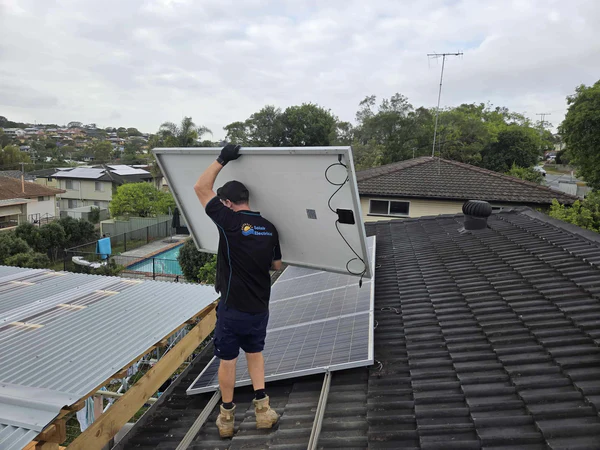
Step 3 — Documentation may be reviewed by qualified law firm partner
If the case meets initial criteria, documentation may be reviewed by attorneys at Consumer Advocacy Law Group. The attorney determines whether the homeowner may qualify for further legal review under NRS Chapter 598 and other applicable law. SCRC does not perform legal analysis.
4
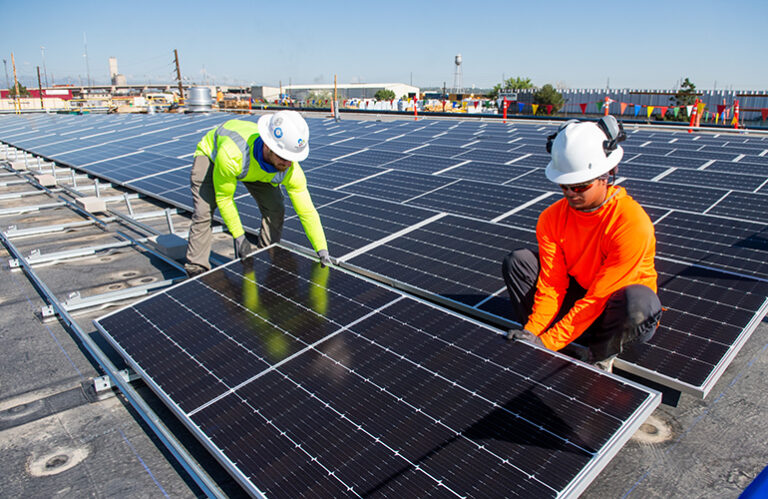
Step 4 — Fixed-fee engagement, if accepted
If the law firm accepts the matter, the homeowner enters a fixed-fee engagement directly with Consumer Advocacy Law Group. The fee is disclosed in full before the homeowner agrees to anything. No hourly billing, no contingency on outcome.
Important: Do Not Stop Making Payments Without Legal Advice
California homeowners sometimes assume that submitting an intake gives them permission to stop making payments on their solar lease, loan, or PPA. That is not the case. Continuing to make payments is generally the safest course of action until a qualified California- licensed attorney has reviewed the contract and provided specific advice. Stopping payments without legal advice may result in default, damage to credit, collections, or other consequences that could complicate the case the homeowner is trying to bring. The law firm engaged by the homeowner — not Solar Cancellation Resource Center — is the only party who can advise on payment decisions specific to the homeowner’s situation.
San Diego Solar Cancellation: Timeline and Cost
Timeline
- Within the SB 784 cancellation window (5 business days under 65, 7 business days for 65+): a homeowner can cancel directly by sending written notice.
- After the cancellation window: an intake review is typically organized within 1–2 weeks. If a qualified attorney accepts the matter, the legal process itself may take several months depending on the complexity of the case and how the solar company responds.
- CLRA damages claims specifically require a 30-day pre-suit notice (Civil Code §1782) before damages can be claimed. Equitable relief (such as rescission) can be sought without the notice.
Cost
SCRC does not charge for the intake itself. If a law firm accepts the matter, the homeowner enters a fixed-fee engagement directly with the firm. The fee is disclosed up front before the homeowner agrees to anything. The fixed-fee model means the homeowner knows the full legal cost in advance — unlike hourly billing (unpredictable) or contingency (percentage of recovery).
Stop guessing whether your situation may qualify for legal review...
Take this intake quiz to see whether your situation may qualify for legal review.
San Diego Solar Cancellation FAQs
Can I cancel my solar contract in San Diego, California?
Possibly. California has multiple legal avenues a homeowner may have for cancellation, depending on the facts. The right of cancellation for home solicitation sales under California Civil Code §1689.5–1689.7 was extended by SB 784 (effective January 1, 2026) to 5 business days for buyers under 65 and 7 business days for buyers age 65 or older. Beyond the cancellation window, contracts may be voidable if the seller violated California consumer
protection laws — including the Consumers Legal Remedies Act (Civil Code §1750+), Business & Professions Code §17200 (Unfair Competition Law), Civil Code §1632 (language requirements), or CPUC solar consumer protection rules. A qualified attorney may review the homeowner’s documentation to determine whether any of these may apply.
What is NEM 3.0 and how does it affect my San Diego solar contract?
NEM 3.0 (officially called the Net Billing Tariff or NBT) is California’s net metering policy that took effect April 15, 2023 for PG&E, SCE, and SDG&E customers. Under NEM 3.0, exported solar energy is credited at California Avoided Cost Calculator values — typically $0.05–$0.08/kWh — rather than the retail rate (~$0.30/kWh) used under NEM 2.0. The result is approximately a 75% reduction in export compensation. A San Diego solar contract sold on retail-rate net metering math but now billed under NEM 3.0 may produce meaningfully less savings than what was projected at the point of sale.
What happened on April 15, 2026? Why does that date matter?
April 15, 2026 was the final deadline for solar systems that had submitted complete interconnection applications before April 14, 2023 to receive Permission to Operate (PTO) and retain NEM 2.0 grandfathering for 20 years. Systems that did not reach PTO by that date are now subject to NEM 3.0 economics — even if the contract was signed years earlier. San Diego homeowners whose installers delayed installation, permitting, inspection, or interconnection may have lost the NEM 2.0 grandfathering they were sold. A qualified attorney may review whether installer non-performance leading to a missed grandfathering deadline may be a potential basis for relief.
What is the California CLRA and how might it apply to my solar contract?
The California Consumers Legal Remedies Act (CLRA, Civil Code §1750 et seq.) prohibits a list of specific unfair or deceptive practices including misrepresenting the characteristics of goods or services, representing that goods have characteristics they do not have, and advertising goods with intent not to sell them as advertised. The CLRA allows actual damages, punitive damages, attorney’s fees, and equitable relief including contract rescission. Civil Code §1782 requires a 30-day pre-suit notice for damages claims. Whether the CLRA applies to a specific San Diego solar contract is fact-specific.
My SDGE bill went up after I went solar. Is that grounds for review?
A bill that went up instead of down is the most common reason San Diego homeowners contact us. By itself, a higher bill does not automatically establish anything legally. But it is often a sign that what was represented during the sale — production estimates, savings claims, net metering math, escalator clauses — may not match what the contract actually says or what the system actually delivers. A qualified attorney may review the gap between the sales claim, the contract documents, and the actual performance to determine whether that gap may be reviewable under California consumer protection law.
My salesperson conducted the sale in Spanish but gave me a contract in English. Does that matter?
Yes — California Civil Code §1632 specifically requires that contracts negotiated primarily in Spanish, Chinese, Tagalog, Vietnamese, or Korean must be translated into that same language before signing. If the sales pitch was in Spanish but the contract was English-only, the homeowner generally has a right of rescission. This protection applies to door-to-door solar sales. San Diego homeowners who experienced this scenario should preserve any sales materials, recordings, or witnesses to the language used during the sale.
What if my San Diego solar installer was not properly licensed?
Every California solar installer must be licensed by the Contractors State License Board (CSLB), typically as a C-46 Solar Contractor or C-10 Electrical Contractor. Contracts performed by unlicensed contractors are generally not enforceable under California Business & Professions Code §7031. San Diego homeowners can verify any contractor’s license status at cslb.ca.gov. If the installer was unlicensed, improperly licensed, or had their license suspended, that may be a basis for legal review.
Is there a UCC-1 lien on my San Diego home?
UCC-1 financing statements are sometimes filed by solar companies or finance companies in connection with a solar transaction. UCC-1 liens are filed against the solar equipment, not against the home itself. In practice, however, they can complicate a home sale because title companies and mortgage lenders sometimes raise concerns. Many San Diego homeowners contact us specifically because a UCC-1 surfaced during a sale or refinance and they want documentation reviewed by qualified legal counsel before the closing date.
Do I have to stop making my solar payments?
No — and you should not stop payments on your own. Continuing to make payments is generally the safest course of action until a qualified California-licensed attorney has reviewed the contract and provided specific advice. Stopping payments without legal advice may result in default, collection activity, and credit consequences that can complicate any case the homeowner is trying to bring. Decisions about payments are made later, with attorney guidance, only if the case moves forward.
How much does the intake process cost?
The initial intake is free. If a legal review path is offered after documentation is reviewed, the homeowner is presented with a fixed-fee structure in writing before they decide whether to engage with the law firm. The fixed fee is disclosed in full up front. No hourly billing, no
contingency.
Related Resources
Explore Your San Diego Contract Options — Free, Fast Request
Takes under 60 seconds. Speak to a San Diego specialist today.
Call: 888-918-2083
BBB A+ Rated • Fixed Fee • Partnered with Consumer Advocacy Law Group
Solar News

Understanding State Attorney General Actions and Recent Residential Solar Crackdowns

Understanding the Mechanics of Solar Finance, Dealer Fees, and Contract Values